
A few years ago, if you mentioned artificial intelligence to a Nigerian business owner, you'd likely get a laugh, a shrug, or a version of that's for Silicon Valley, not us. Today, that same business owner might be using it without even realizing an automated WhatsApp reply here, a fraud alert there, a credit decision made in seconds instead of days.
Something has shifted. Quietly, and faster than most people realize, this technology has moved from a foreign buzzword to a working part of how businesses actually operate. This post is about that shift. What's driving it, where it's already showing up, the mistakes businesses should avoid, and what you can start doing today if you don't want to be the one still catching up two years from now.
Why This Technology Is No Longer Optional for Nigerian Businesses#
For a long time, it felt like something happening elsewhere, a headline about ChatGPT, a story about self-driving cars, tools built for markets with different problems than ours. But Nigerian businesses face some of the most demanding operating conditions in the world: high customer volume, thin margins, unreliable infrastructure, and a market that moves fast whether you're ready or not.
That combination has turned out to be exactly the environment where smart automation proves its worth. Nigerian businesses don't need it for novelty. They need it because a single overwhelmed customer service line, a single missed fraud pattern, or a single slow credit decision can cost real money, right now, not someday. Adoption here isn't following the global hype cycle, it's being pulled forward by necessity.
The Story Behind the Shift: A Business Owner Who Said "I Don't Like Anything AI"#
Not long ago, at a business exhibition, a colleague and I approached a business owner to talk about a WhatsApp automation tool. Before we finished our first sentence, she cut us off. ‘I don't like anything AI,’ she said, already turning away.
We asked for two minutes. By the end of that short demo, her arms had uncrossed, and her skepticism had turned into curiosity. What changed her mind wasn't a sales pitch, it was seeing the tool behave the way she actually wanted her business to behave: fast, clear, human-sounding, and helpful, without the rigid menus and misunderstood questions.
Her reaction wasn't unusual. A lot of resistance to this technology in Nigeria isn't really resistance to the tech itself, it's resistance to bad experiences that happened to wear that label. Once business owners see it done well, the conversation changes fast.
Where This Technology Is Already Working Inside Nigerian Businesses#
It isn't a future promise here, it's already embedded in daily operations across several industries, often invisibly.
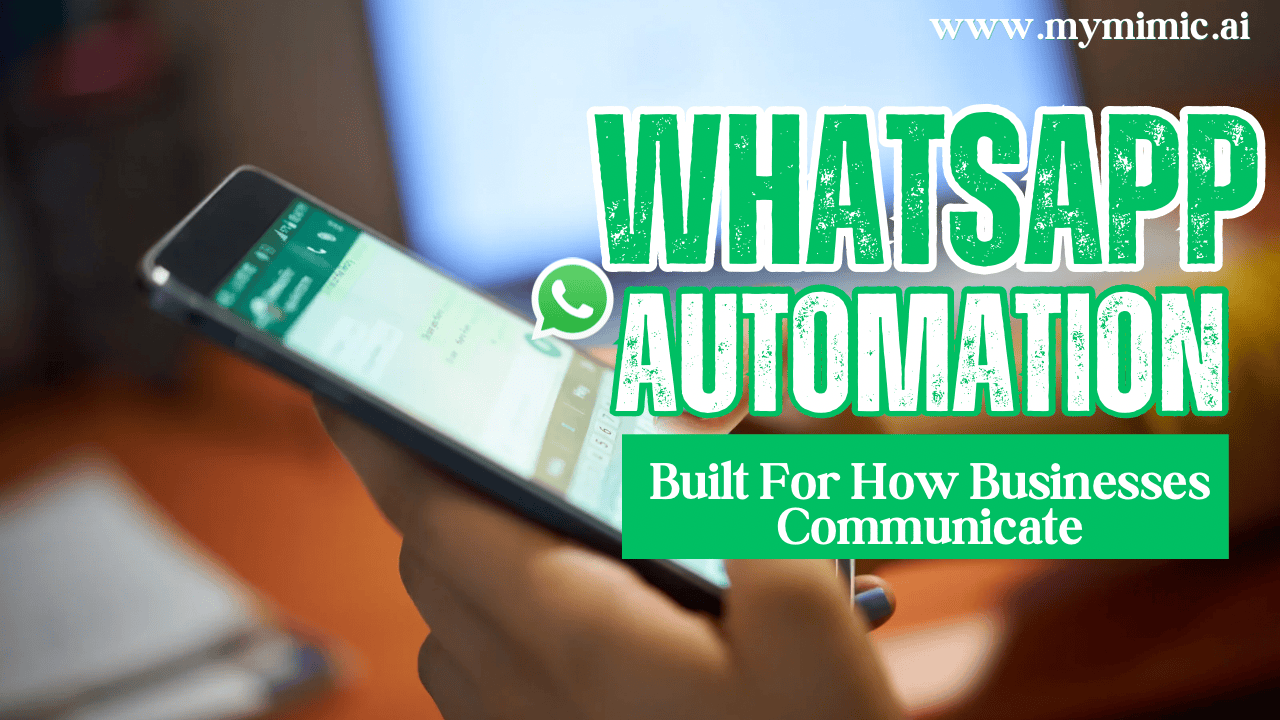
- Customer service and engagement: WhatsApp automation tools now handle customer conversations at scale, replying naturally and instantly, at any hour, without requiring a business to hire a large support team just to keep up with message volume.
- Fraud detection: Smart, pattern-based systems catch suspicious transaction activity in real time, protecting businesses and customers before losses happen, not after.
- Credit decisioning and KYC: What used to take days of manual paperwork like verifying a customer's identity, deciding if they qualify for credit can now happen in minutes, without sacrificing accuracy.
- Compliance and AML: As regulators like the Central Bank of Nigeria pay closer attention to how automated systems are used within financial services, businesses are using this technology to monitor transactions and stay compliant without dedicating entire teams to manual review.
- Flexible payment infrastructure: Smarter credit assessment tools are quietly powering Nigeria's growing ‘pay small small’ culture, helping businesses offer Buy Now, Pay Later options responsibly, at scale.
None of these use cases require a business to be a tech company. They require a business willing to plug into the right tools.
The Mistakes Nigerian Businesses Make When Adopting New Technology#
Not every adoption story ends well, and it's worth being honest about why.
Some businesses rush to automate everything at once, including conversations that genuinely need a human touch. A frustrated customer, a sensitive complaint, a high-value client who wants to feel heard, not processed. Others choose tools built for entirely different markets, missing the local context, language patterns, and customer expectations that make or break the experience. And some treat automation as a way to cut corners rather than improve service, which customers notice immediately and rarely forgive.
The businesses succeeding here treat this technology as an amplifier of good service, not a replacement for it.
How to Start Integrating Automation in Your Business Today#
You don't need a tech team or a massive budget to start. A realistic starting point looks like this:
- Identify your most repetitive, time-consuming task first - customer FAQs, order status updates, or identity verification are common starting points.
- Choose tools built with your market in mind, ones that understand local language, tone, and customer behavior, not generic global software retrofitted for Nigeria.
- Keep a clear path to a human for anything the system can't confidently resolve, this single decision protects trust more than almost anything else.
- Start small, measure results, then expand: A phased rollout lets you catch issues early instead of automating your way into a customer relations problem.
- Watch what your competitors are doing: If businesses in your industry are already responding faster or serving customers better because of it, that gap will only widen the longer you wait.
The Real Opportunity in Nigeria's Growing Tech Adoption#
Nigeria's business landscape rewards speed, resourcefulness, and the ability to serve more customers without proportionally more overhead. This technology, used well, is one of the clearest paths to exactly that. The businesses already benefiting from it aren't necessarily the biggest ones, they're the ones willing to try something new before it became obvious to everyone else.
The gap between businesses using it well and those ignoring it entirely isn't going to stay small for long. Every month that passes, the ones adopting it pull further ahead in speed, cost efficiency, and customer experience.
Ready to See What This Can Actually Do for Your Business?#
If you've been putting off exploring this because of a bad experience, a stiff chatbot, or simply not knowing where to start, you're not alone, and you're not out of time yet. The businesses winning here didn't start with certainty. They started with curiosity and a willingness to see it in action.
Talk to our team today and see what's actually possible for your business by visiting www.izifin.com
About the Author
Eniola Apesinola
Contributing writer at the IziFin team. Exploring the frontiers of data engineering, automated finance, and financial inclusion.