"Embedded intelligence" is one of those phrases that sounds impressive but gets used loosely enough to mean almost anything. For some, it conjures images of autonomous vehicles and factory-floor robotics. For others, it's a smart chip inside a phone. For a growing number of businesses, though, embedded intelligence means something much closer to home: AI decision-making built directly into the everyday software they use to run their operations. Approving a loan, flagging fraud, or replying to a customer on WhatsApp, all without a human manually stepping in for every single decision.
This blog breaks down what embedded intelligence actually means, why it's becoming so important across very different industries, and where Izifin fits honestly into that picture, not as a hardware company competing with chipmakers, but as a specialist in embedding intelligence directly into financial and customer-facing workflows.
What Embedded Intelligence Actually Means#
At its core, embedded intelligence refers to Artificial Intelligence (AI) or machine learning capability that's built directly into a system, hardware or software. So decisions can be made instantly, locally, and without constant back-and-forth to a distant server or a human reviewer.
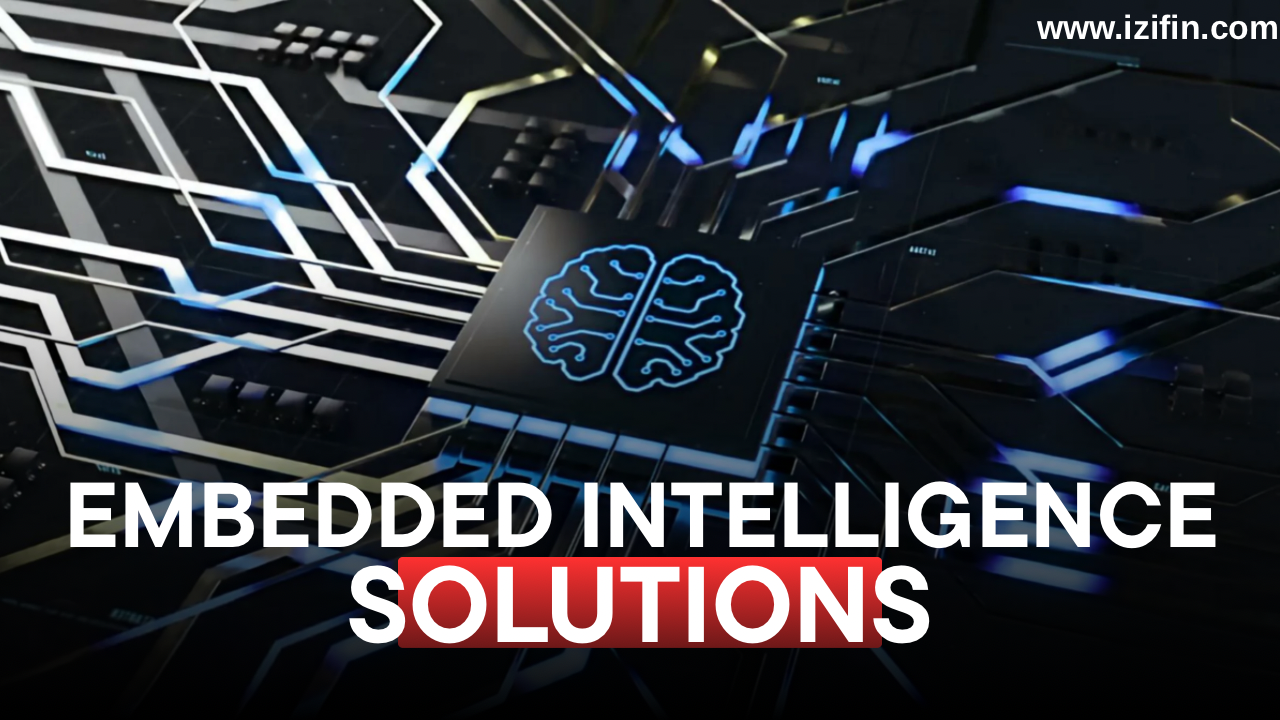
This shows up in two very different worlds. On the hardware side, it means specialized chips and processors, the kind built by companies like NVIDIA, Intel, Qualcomm, and Arm. That allow devices like cameras, sensors, robots, and vehicles to process information and make split-second decisions on the device itself, without needing a live connection to the cloud.
On the software and operations side, it means AI models embedded directly into business platforms. The systems that approve a credit application, flag a suspicious transaction, or hold a customer conversation, making those decisions instantly as part of the workflow, instead of as a separate, bolted-on step.
These two categories solve genuinely different problems, and it's worth being honest about that distinction rather than blurring them together. A company building AI chips for autonomous drones is not doing the same thing as a company embedding fraud detection into a checkout flow, even though both fall under the broad "embedded intelligence" umbrella.
Why This Matters Across Industries#
The appeal of embedded intelligence, in either form, comes down to the same core benefit, removing delay and manual bottlenecks from decisions that need to happen fast.
In industrial and manufacturing settings, embedded intelligence lets sensors catch a mechanical fault before it causes a breakdown, or lets a camera on an assembly line spot a defect in milliseconds. In automotive applications, it powers driver-assist features and predictive maintenance systems that react in real time.
In financial services, the space we know best, it means a customer doesn't have to wait days for a credit decision, or a business doesn't discover fraudulent activity only after the money is already gone.
Across all these applications, the pattern is the same. Intelligence that used to require a slow, centralized process now happens instantly, embedded directly into the moment it's needed.
Izifin’s Embedded Intelligence for Financial and Customer Workflows#
Izifin operates specifically in the software and operations side of this picture, embedding AI decision-making directly into the financial and customer-facing workflows Nigerian businesses rely on every day. Rather than manufacturing physical chips, we build the intelligence layer that sits inside a business's checkout flow, customer support channel, and compliance process.
This shows up across three connected areas of our platform. Our BNPL (Pay Small Small) infrastructure embeds real-time credit decisioning directly into a checkout flow, so a customer can be assessed and approved for an instalment plan in the moment they need it, not days later. Our WhatsApp automation tool, Mimic, embeds conversational AI directly into the channel Nigerian customers already use most, handling everything from answering questions to guiding a customer through a purchase, instantly and without a human needing to manually manage every conversation. And our fraud detection and AML tools, including Sentinel, embed real-time risk screening directly into transactions as they happen, catching suspicious activity before it becomes a loss rather than after.
In each case, the intelligence isn't a separate system a business has to check manually, it's built directly into the workflow itself, which is the actual definition of "embedded" intelligence, applied specifically to financial services.
The Honest Distinction Worth Making#
It would be easy to lump Izifin in alongside chip manufacturers and call it "the leader in embedded intelligence" broadly, but that comparison doesn't hold up to scrutiny, and we'd rather be precise than impressive-sounding. NVIDIA, Intel, Qualcomm, and Arm solve the hardware side of this problem at a scale and in a domain physical silicon powering edge devices that's genuinely different from what a tech infrastructure company does.
Izifin's focus, and where we believe we do genuinely strong work, is embedded intelligence specifically for financial and customer engagement workflows, the kind of decisions that determine whether a customer gets approved for a payment plan, whether a transaction gets flagged as suspicious, and whether a WhatsApp conversation gets handled instantly instead of sitting unanswered for hours.
Choosing the Right Embedded Intelligence Partner for Your Business#
If you're a business evaluating embedded intelligence solutions, the most useful question isn't "who is the biggest name in embedded intelligence broadly." It's "who actually understands the specific workflow I need embedded intelligence for."
A business building autonomous hardware needs a chip and edge-computing partner. A business trying to reduce fraud, speed up credit decisions, or automate customer conversations at scale needs a partner that specializes in exactly that, built with an understanding of local market behavior, not a generic model retrofitted from elsewhere.
Embedded intelligence is a genuinely useful concept, but it covers more ground than any single company can honestly claim to lead entirely. Izifin's place in that landscape is specific and, we'd argue, significant: embedding real-time credit decisioning, conversational AI, and fraud prevention directly into the financial workflows Nigerian businesses depend on every day.
If your business is looking to embed intelligence into how you assess credit, detect fraud, or engage customers on WhatsApp, that's exactly where we focus, and where we'd rather earn the description "leader" through what we actually do, not through a comparison that doesn't quite fit.
Talk to our team to see how Izifin's embedded intelligence infrastructure, BNPL, Mimic, and Sentinel can work for your business. 09163749161 | www.izifin.com
About the Author
Eniola Apesinola
Contributing writer at the IziFin team. Exploring the frontiers of data engineering, automated finance, and financial inclusion.